
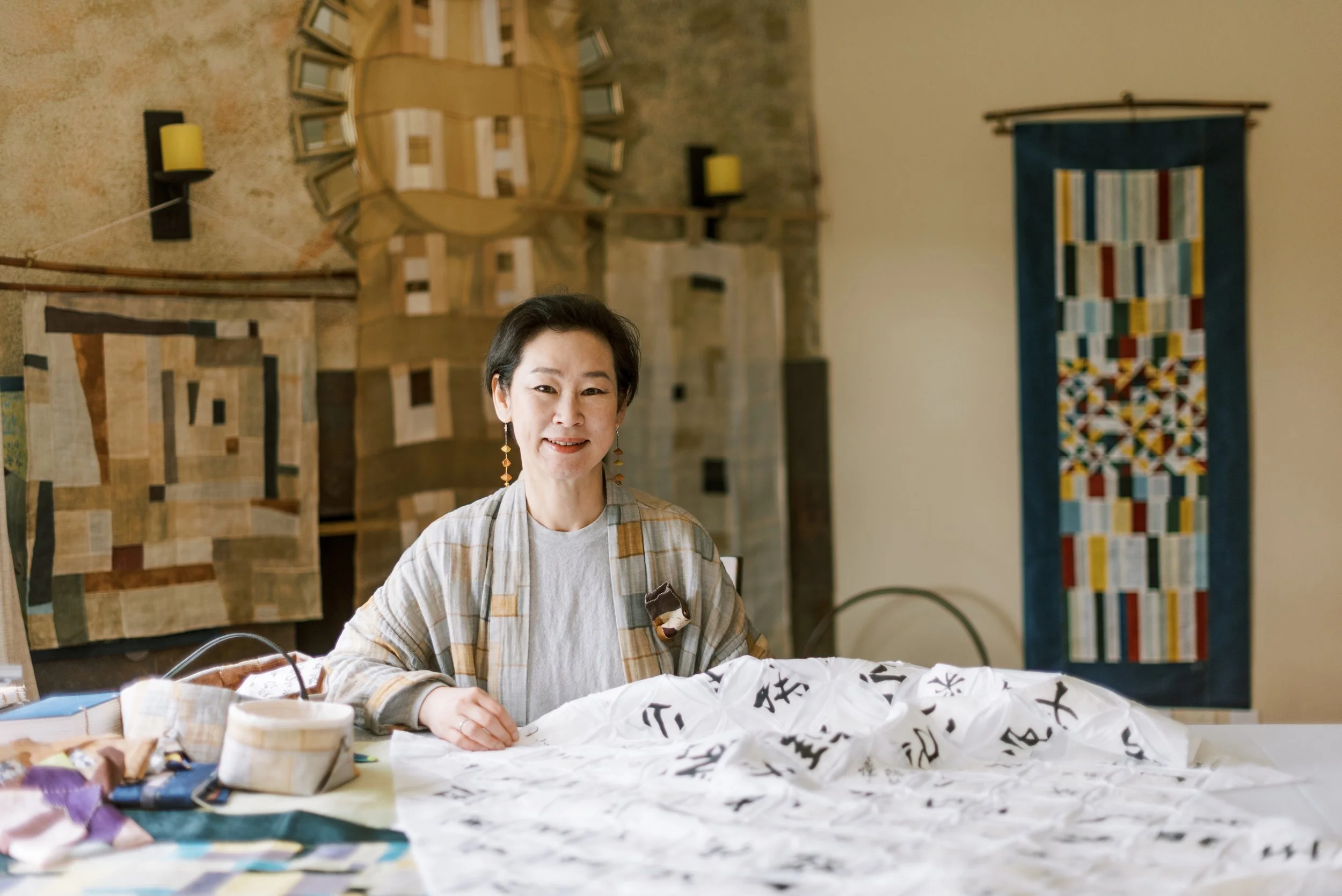
Photo credit: Melanie Zacek for Quiltfolk Magazine
Youngmin Lee

Youngmin Lee is a textile artist who uses bojagi tradition and techniques to create her work. Her interest in textiles led her to study Clothing and Textile in college and received an MFA in Fashion Design in South Korea. She researches bojagi making and techniques and endeavors to apply her findings to both traditional and contemporary art. After moving from Seoul to California, she has been actively preserving the bojagi tradition, that embodies the philosophy of recycling and upcycling, as the works are often made from leftover pieces of fabric from other projects.
She works closely with the Asian American community through community engaged projects and workshops. In addition to teaching in person, Youngmin created the educational DVD, Bojagi: The Art of Wrapping Cloths in 2013 to reach audiences from afar. Her latest book, Bojagi: The Art of Korean Textiles, was published in 2024.
In 2017, she founded the Korea Textile Tour to introduce Korean traditional textile art and culture to bridge broader audiences. Youngmin’s works have been exhibited and collected across the United States and internationally. The Asian Art Museum in San Francisco and the Mingei International Museum in San Diego hold her works in their permanent collection.
Bojagi is an umbrella term for wrapping cloths. Most have a square or rectangular shape. One bojagi can have many names, based on the user or maker’s class, its intended use, and the material, techniques and designs used.
Korean Textile Artist
Bojagi

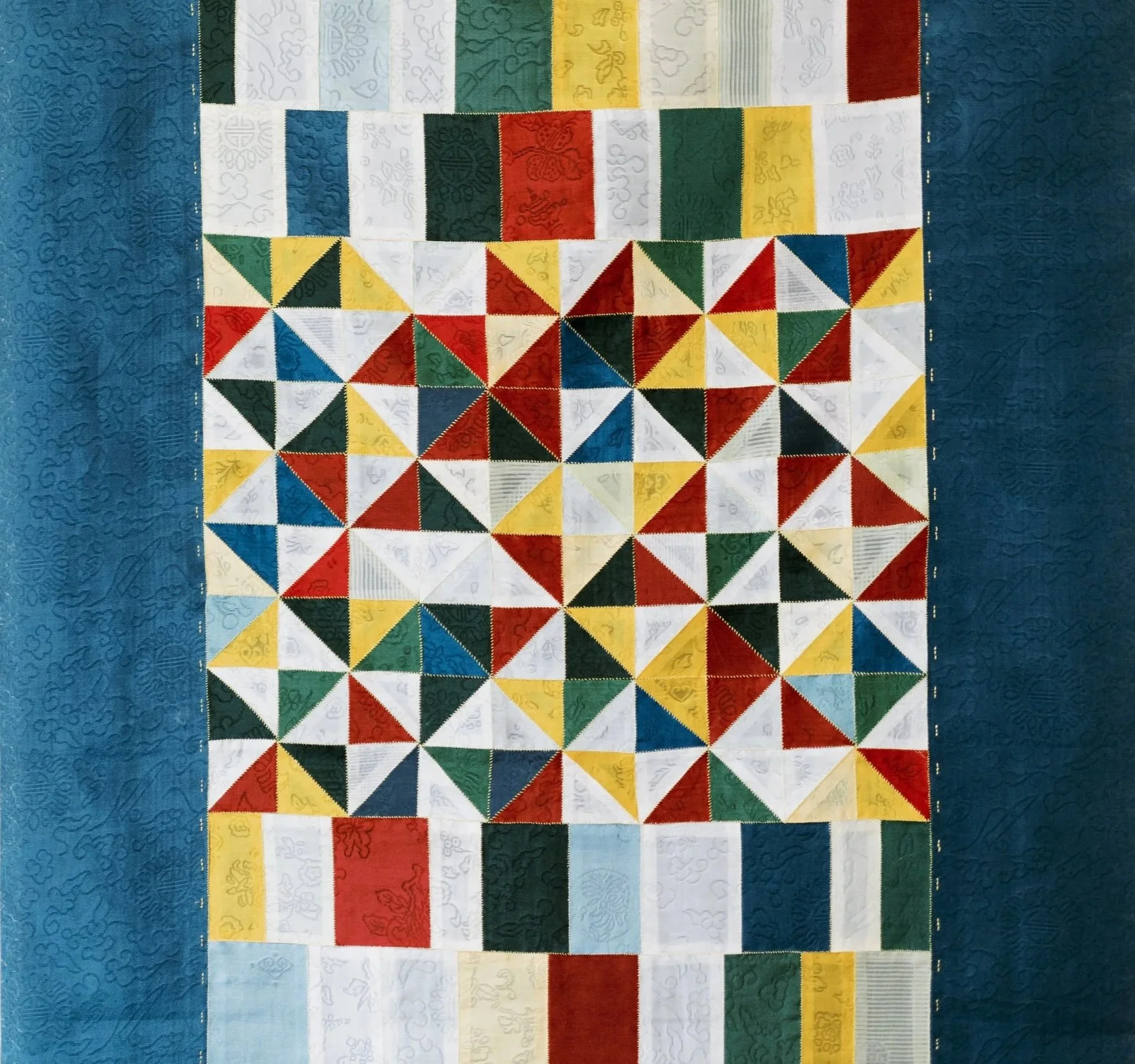
Korean Wrapping Cloths
Bojagi are traditional Korean wrapping cloths. They were used to wrap, cover, carry, or store objects in daily life, on special occasions, and in religious rituals. Koreans believe that bojagi can not only wrap an object but can also enclose bok (福, 복, good fortune or happiness). Seollal (Lunar New Year’s Day) and Chuseok are two big Korean holidays, and people visit family and exchange gifts and presents (often nicely wrapped in bojagi). The act of making bojagi also carries wishes for the well-being and happiness of its recipients. The labor of love and the good wishes felt while making the bojagi imbue the item with the affectionate energy of the maker.
Bojagi is an umbrella term for wrapping cloths. Most have a square or rectangular shape. One bojagi can have many names, based on the user or maker’s class, its intended use, and the material, techniques and designs used.
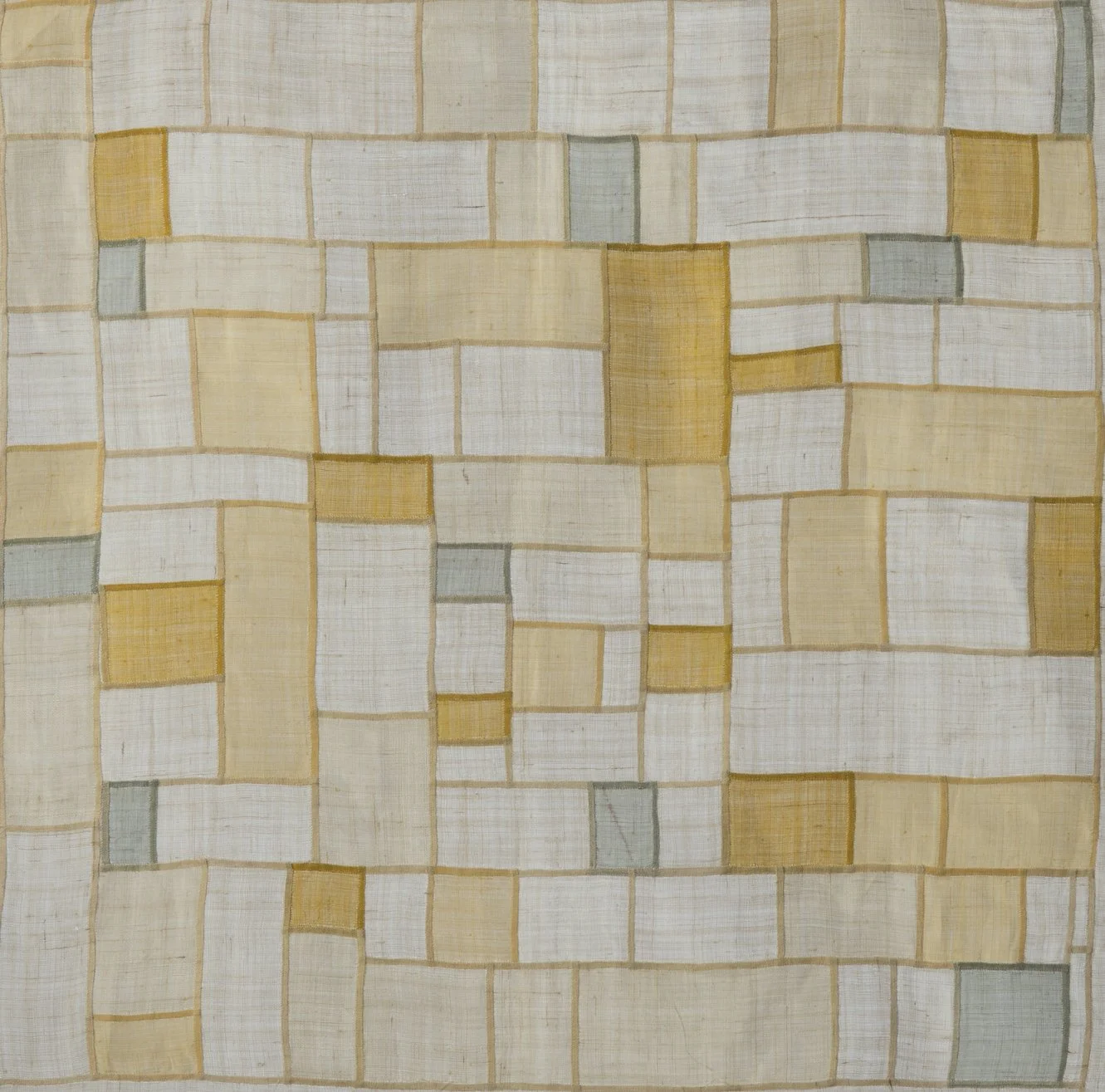
Jogak-Bo

Jogakbo, patchwork bojagi, embodies the philosophy of recycling, as the wrapping cloths are made from remnants of leftover fabric. Jogak means ‘a small piece’ in Korean. There are many types of jogakbo, defined by the materials used, size, construction, and design. Thoughtfully considered arrangements of different shapes and contrasting colors in the bojagi show Korean women’s creative sensibility; they also remind the viewer of abstract compositions, similar to those we often see in contemporary designs.
Contact Youngmin
If you would like to purchase any artwork, commission a piece, or have any other questions.